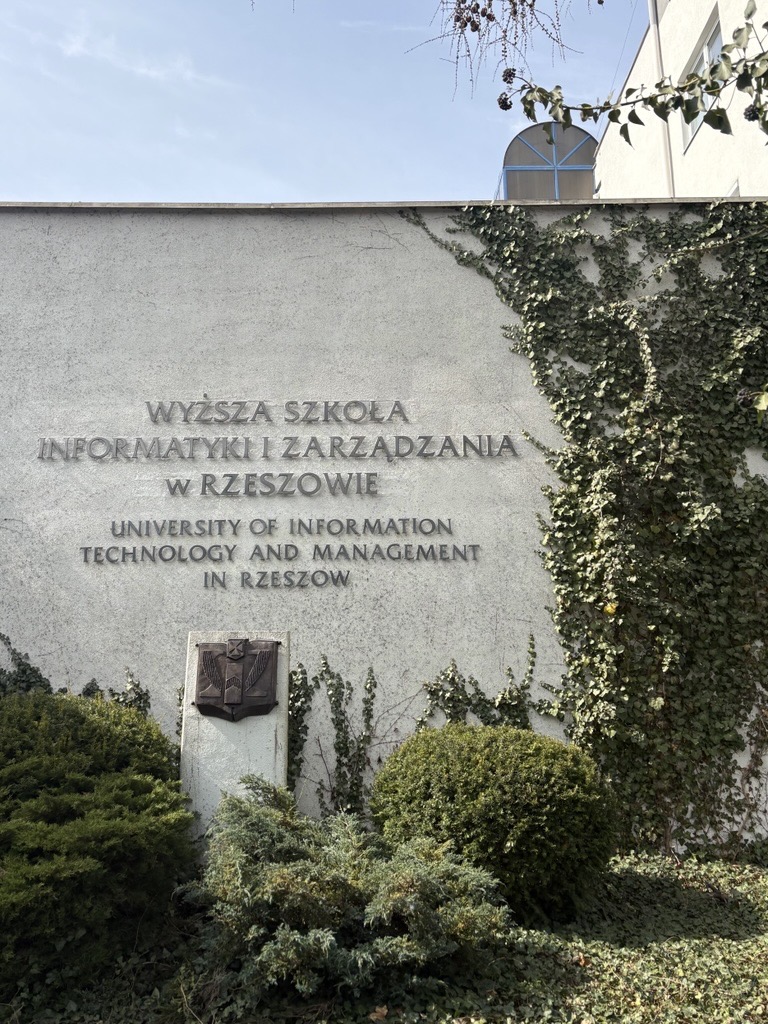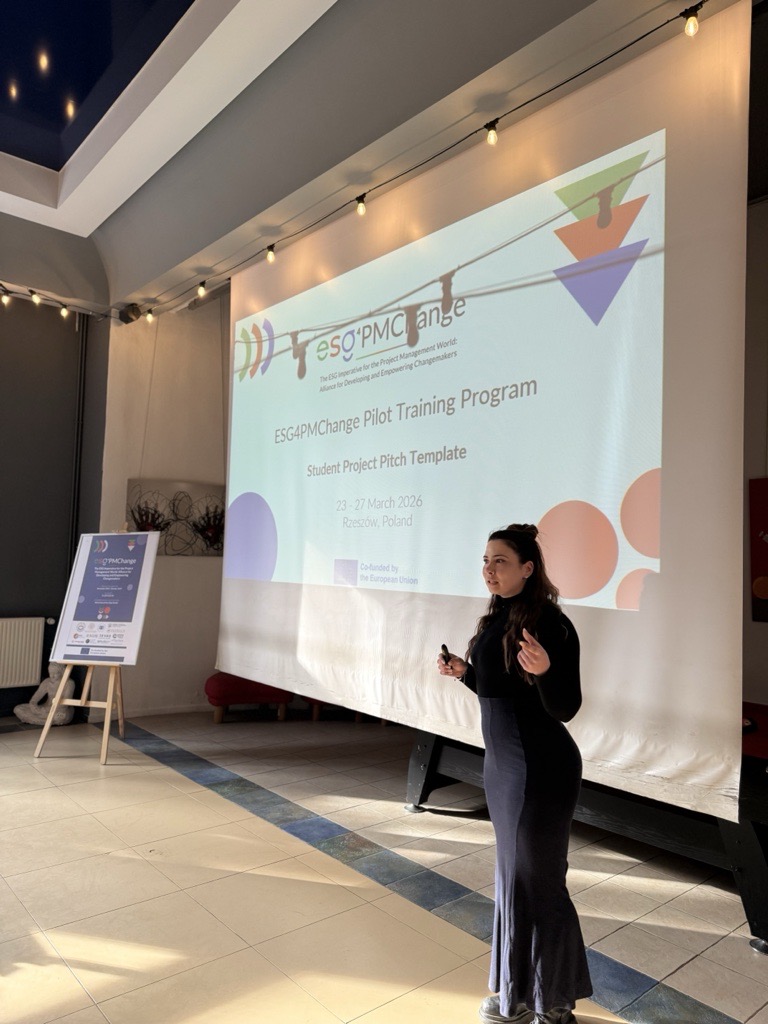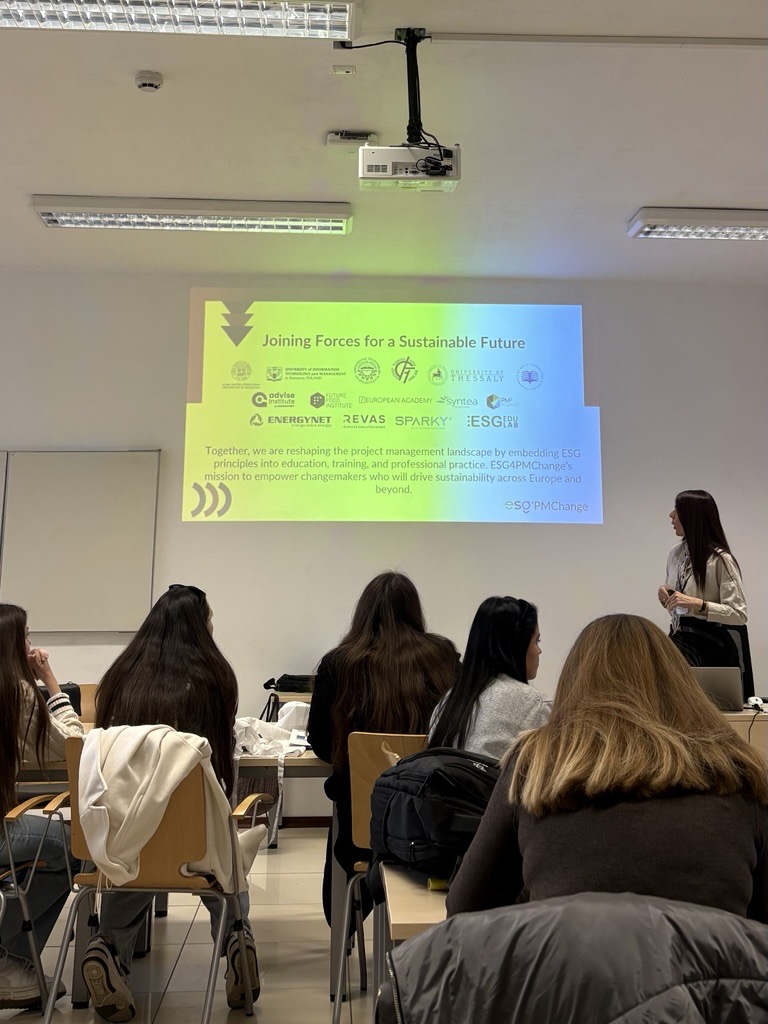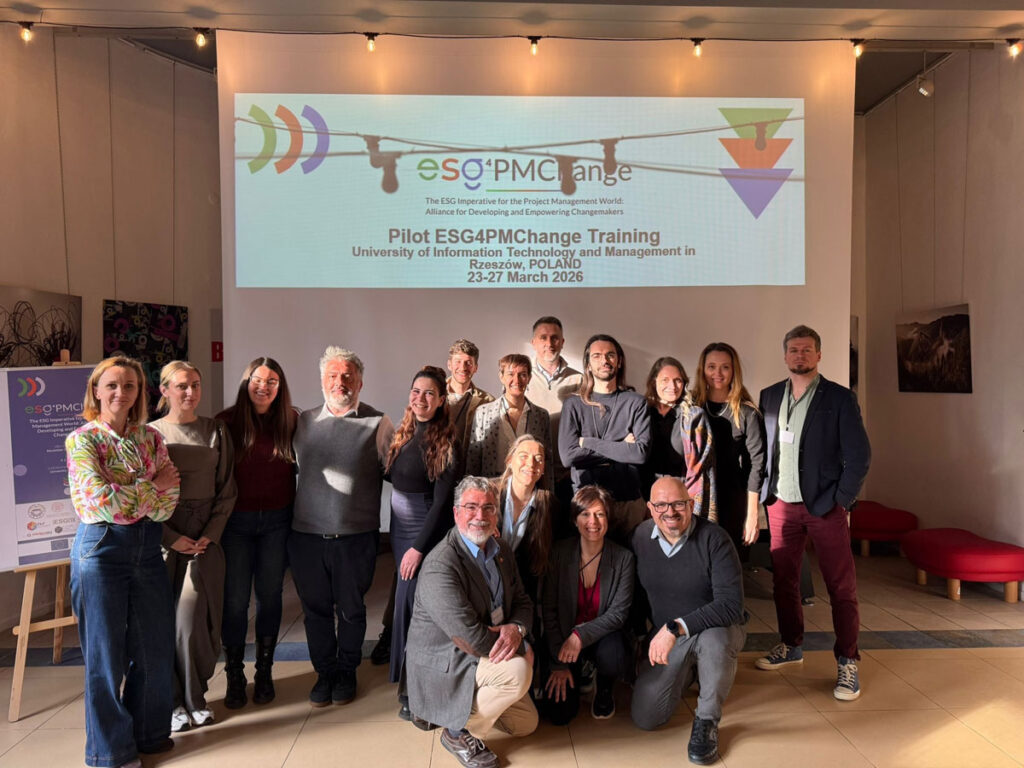
Between 23 and 27 March 2026, the ESG4PMChange partnership met in Rzeszów, Poland, for a pilot week that put one important question to the test: what changes when ESG is treated not as a principle on paper, but as something that has to shape real project choices? The training was hosted by the University of Information Technology and Management in Rzeszów as part of the wider ESG4PMChange effort to strengthen ESG-focused project management competences through innovative learning, practical application, and recognised learning pathways.
For PM² Alliance, the value of the week was precisely in this shift from discussion to application. Rather than approaching ESG as a separate topic, the pilot placed it inside the structure of project work itself. Participants were asked to think through how project purpose, stakeholder expectations, governance arrangements, risks, trade-offs, and performance indicators interact when a project is designed with ESG in mind.
This made the training especially relevant from a project management perspective. Good intentions alone are not enough. Once ESG enters the project environment, it immediately raises practical questions: Who is accountable? Which trade-offs are acceptable? How should competing priorities be handled? What counts as success when environmental, social, and governance dimensions are all in play? These are not abstract questions, and the pilot was designed to make that clear.
A particularly strong part of the week was the simulation-based work. Under time pressure and with competing demands, participants had to see whether the logic of their project could actually hold. That exercise brought a different level of realism to the training. It showed that ESG becomes meaningful only when it can survive real constraints, difficult choices, and imperfect conditions. In that sense, the simulation was not just an activity; it was a stress test for project thinking.
ESG integration is not only about adding new themes to a project. It is about improving the quality of decisions, strengthening accountability, and expanding the way success is understood. A project cannot be considered strong simply because it is delivered on time and within budget if questions of governance, impact, and responsibility remain unresolved.
The week in Rzeszów also included partner meetings focused on the next stages of project development, including teaching materials, platform readiness, and the micro-credential framework. These discussions matter because they help ensure that what is tested during the pilot phase can be translated into usable project results and stronger learning pathways for future implementation. The project also includes work on a digital resource hub and a micro-credential framework as part of its broader design.
Seen from the PM² Alliance perspective, the pilot week in Poland was not simply a training event. It was a useful space for examining how ESG can be embedded into project design in a way that remains structured, realistic, and actionable — and for showing that responsible project management depends as much on sound governance and decision quality as it does on ambition.
Stay Connected
Follow ESG4PMChange on LinkedIn and Instagram for project news, partner stories, and highlights from our activities across Europe. You can also visit the project website to learn more about our goals, explore upcoming resources, and see how the consortium is helping shape the future of project management.