An Overview of the PfM² Portfolio Management Methodology
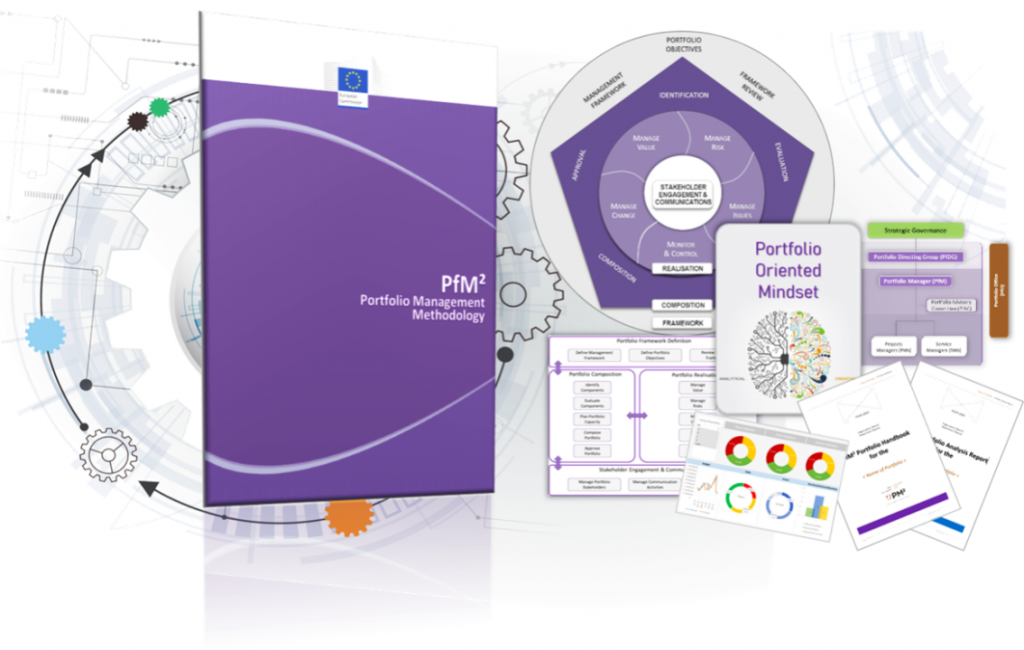
Note: An updated version of the PfM² Methodology Guidelines and this article can be found at http://www.PfM².website. An updated Overview of the PfM² Methodology (read more here). On July 11th, 2019, the PfM² Portfolio Management Methodology guidelines were completed and delivered to the Strategic Planning & Monitoring Unit of DiGIT, European Commission. The PfM² Portfolio Management Methodology was developed to

The Portfolio Oriented Mindset
Portfolio governance, processes, artefacts, and techniques help those involved in portfolio management optimise their management efforts and portfolio results. However, as “culture eats procedures for breakfast”, managing organisational culture and influencing people’s perspective, attitudes and perception should be of high priority when implementing portfolio management. A suitable and well-tailored portfolio methodology is, of course, essential for effective portfolio management, but successful implementation

Implementing Portfolio Management
The path to implementing organisational strategy is very often seen as straightforward: you define what the strategic objectives are, then draw a path to that outcome by setting up an implementation plan and wait for the plan to deliver. We (assume that we) have all the information we need upfront, we define a set of activities and management procedures, and

The PfM² Portfolio Management Mindsets
While governance, plans and processes help us with what we could refer to as the administrative side of portfolio management, the right Mindsets help us develop a portfolio orientation and navigate the complex reality of portfolio management within organisations. Portfolio mindsets are an essential part of any portfolio methodology. Just as we establish procedures to help us manage a portfolio better,

Project Governance and the ARSCI Model
Project Governance Project governance is one of the pillars of good project management and a Critical Success Factor (CSF) for all projects, particularly for complex projects which involve multiple organisations, with different procedures and culture – which often pursue and defend their own interests and perspectives. Project governance is the framework within which project management decisions are made. It defines

Project Management Mindsets
Projects are a means of creating value for stakeholders by producing outputs and outcomes which result in benefits of higher value than the cost of their production. To manage more effectively this value-creation process, project management best practices are applied, often packaged in the form of a methodology. Many believe that applying a project management methodology simply means following procedures,

One common, free and open Project Management Methodology for Europe
On February 1st & 2nd 2018, the European Commission and the Center of Excellence in Project Management (CoEPM²) ran their inaugural PM² Conference. The conference brought together representatives from EU Institutions, Public Administration from Member States, PM² Practitioners, Service Providers and PM² Methodology Experts to learn from each other. And it announced the EU’s vision for a common, free and open project management methodology